
Following the Trail
Urban hikes and beyond

It’s not even the first day of winter, and I’m already thinking wistfully of summer. I see a photo of a previous summer and all the feelings of warm weather return like some kind of phantom itch. Each season seems forever away, only to arrive and depart unexpectedly one day.
My latest urban hike was on the last truly hot day of the year in New York, when none of us knew it would be the last hot day and winter seemed impossible. Skepticism of winter was due in part to the fact that this hot day was in early October, weeks away from Halloween. When I was growing up in Connecticut, Halloween was a struggle between wearing your costume as you wanted versus fitting the costume over a winter jacket at your mother’s insistence. As my fiancee, Kelsey, and I set out on the trail on October 5th, the thermometer was ticking up towards 90.
An hour and many subway transfers from home, we emerged from the Kew Gardens stop and made our way to Forest Park. My only previous experience with the area was my time at the nearby Queens Borough Hall for jury duty. There’s a nice park on the far side of the courthouse where I was able to relax during my lunch hour, but otherwise the area does not scream “peaceful parkland.”
But the area does scream. Queens Boulevard, Union Turnpike, Jackie Robinson Parkway, Grand Central Parkway, and the Van Wyck Expressway all intersect with and weave around each other within a quarter mile radius of the subway station. Which is why I recommend turning south and west as quickly as possible towards Forest Park.
We had no plan once we got to the park other than to wander one of the hiking loops. The maps online and on display throughout the park are very simple: there is an orange loop that travels the perimeter of the park, a blue trail that’s about half as long, and an even shorter yellow path. It looked like there were some small extraneous paths here and there, but they didn’t register as a concern as we set off along the orange blazes.
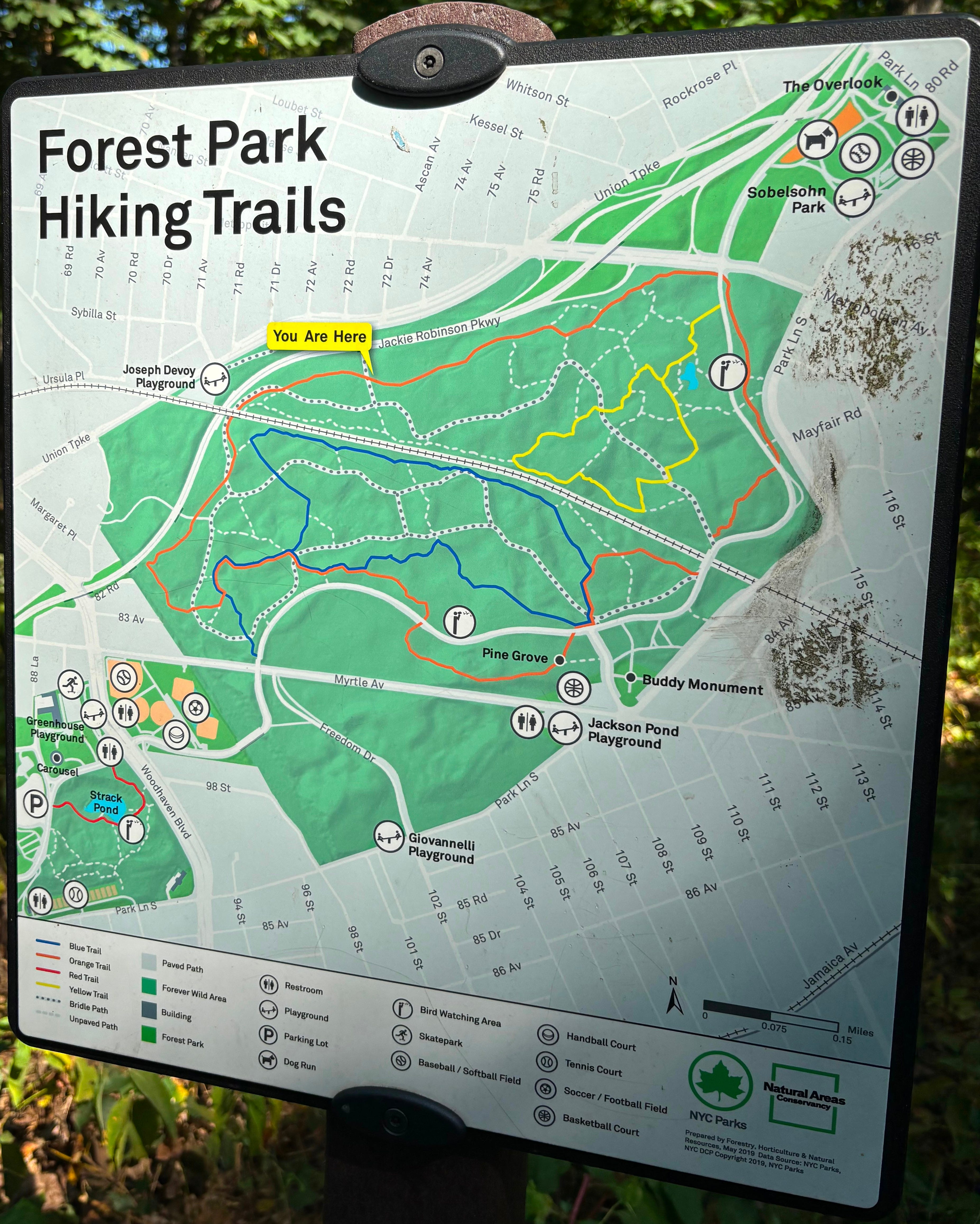
Mere steps into the park, we found there were all sorts of paths bending in all directions, with no clear indication of which was the trail we wanted to be on. Forks in the road spawned more forks in the road. Two paths that looked to go in opposite directions met back up with each other after a few feet. The trail flipped between dirt paths, paving, crumbled paving, and stone. It didn’t help that the blazes on the trails were a mix of painted markers and plastic decals, nearly all of them faded.
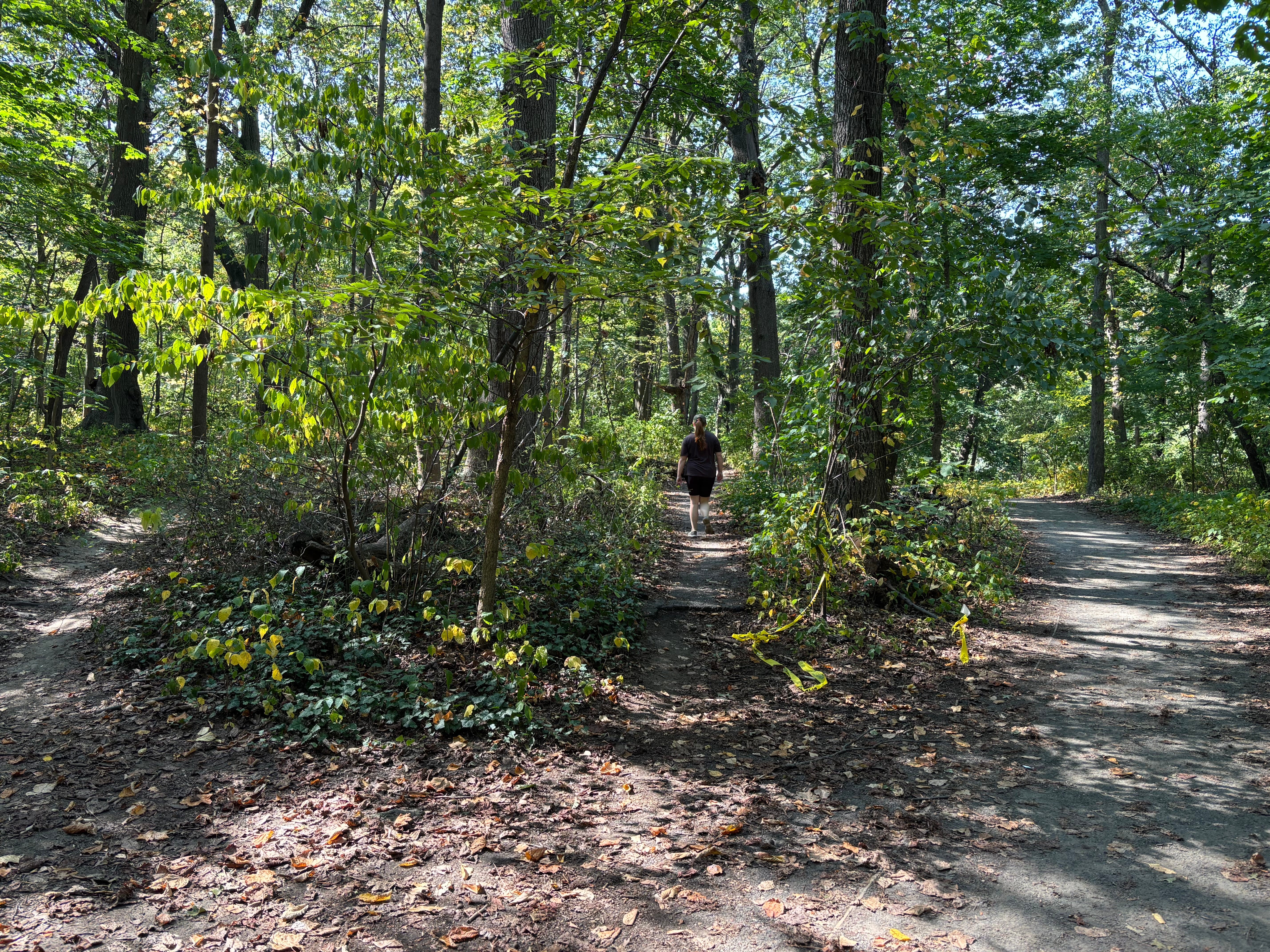
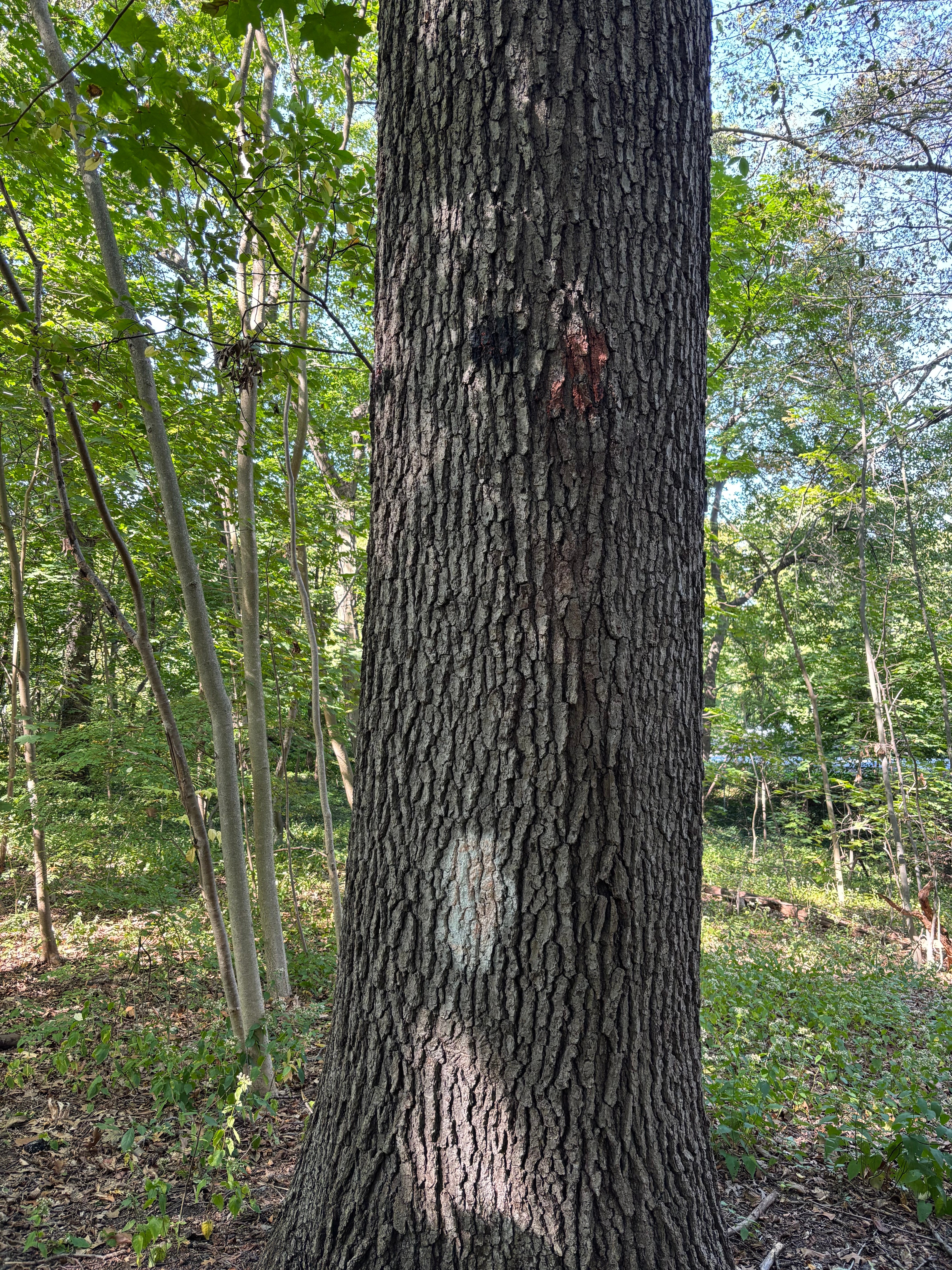
A note to the Parks Department: In an urban environment, faded orange markers look more like trees marked to be cut down than they look like directional aids. Or they are so faded they look like nothing at all.
Once we resigned ourselves to just walking and not worrying about the path we were on, we realized that the path didn’t really matter. We were able to just wander and enjoy the oaks and tulip trees, the sun sparkling off the leaves that would soon coat the forest floor. We drifted up and down the rolling hills of the park, which I later learned are described as a “knob and kettle” terrain. I don’t completely understand the term, but how cool!
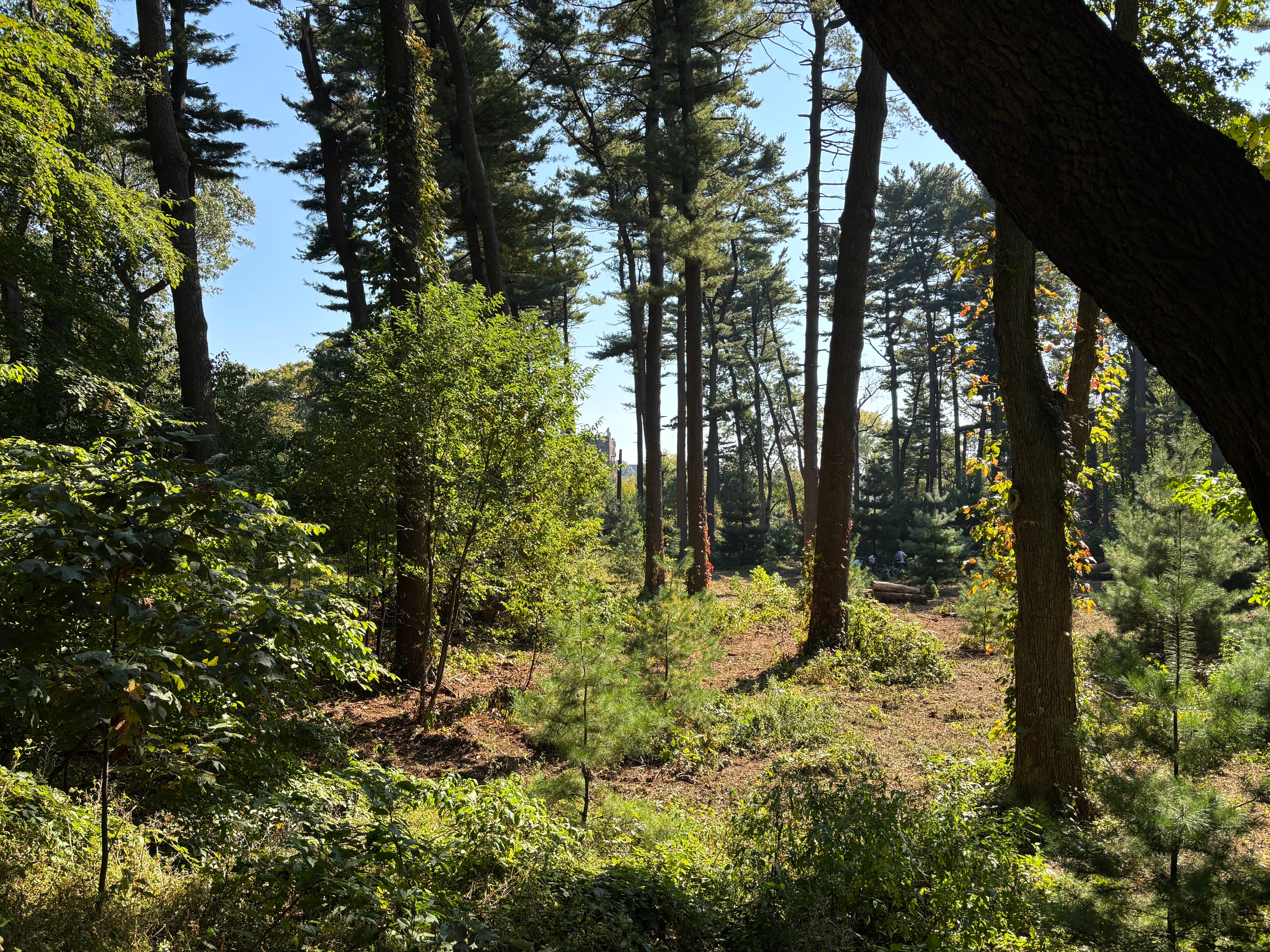
Towards the southern end of the park, we arrived at the Pine Grove, a field of towering pines that sit on the slope of one of the hills (is that the “knob” or the “kettle”?). From our vantage, we were looking gradually downhill at the grove, with a greater drop-off of the terrain in the distance obscuring the buildings of the Richmond Hill neighborhood beyond. The effect is unbelievably dramatic; the optical illusion makes the forest go on forever, with no indication that you’re in the middle of Queens.
Getting lost in a city park doesn’t really matter, and in many ways isn’t truly possible in the first place. The boundaries are well defined and finite. The world surrounding you is full of orienting information, beyond the personalized mapping and GPS capabilities of your phone. The consequences of getting lost are much smaller when there’s a subway stop and bodega nearby. Getting lost might be the point in those situations, creating the conditions where you find the most fun. It’s how you find the Pine Grove.
Increase the size of the park, the length of the hike, and the distance to food. A few months after our trip to Forest Park, I was hiking in the Catskills with my friend, Ari. We set out on a six mile loop, this time following blue, then red blazes, up Indian Head Mountain. The mountain, one of the Catskill high peaks at just over 3,500 feet, stands near the edge of the Catskills, offering views of the mountains unfolding in one direction and, opposite, the vast Hudson River Valley stretching to the horizon.
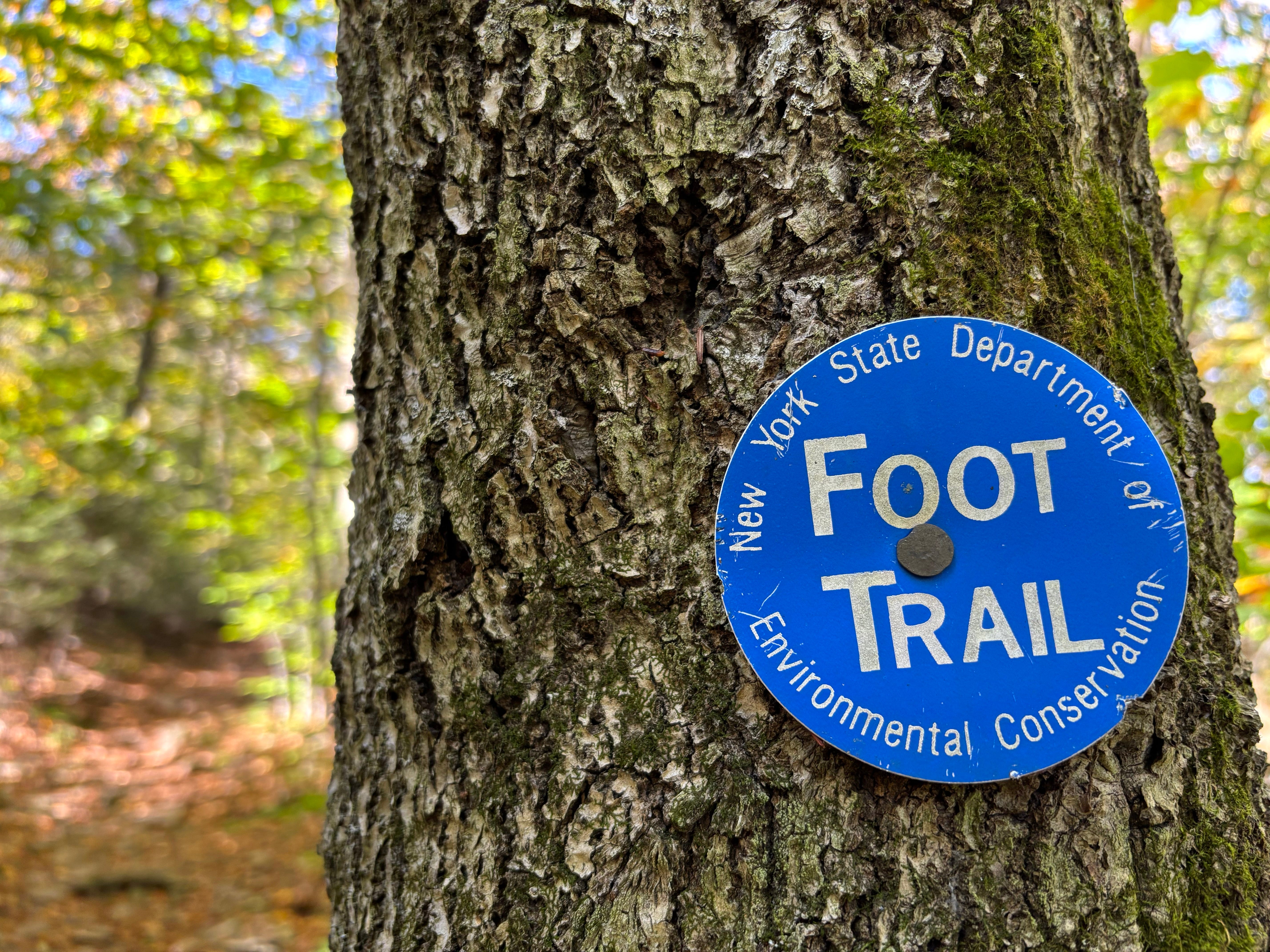
Trails in the Catskills – part of the State Forest Preserve – maintained by the New York Department of Conservation are much easier to follow than the faded blazes of Forest Park. Most of the time, we were able to step with confidence and focus on the woods around us, rather than wondering if we were going the right way. We crossed streams descending from the summit and scrambled our way up Jimmy Dolan Notch, with Indian Head on our left and Twin Mountain looming higher on our right. At the depression between the two summits – a false peak but a spot to catch our breath nonetheless – we could just make out the valley through the trees. Up and over the summit to our left were outcroppings with uninterrupted vistas for us to enjoy of the sea of changing trees in autumn.


All of this was possible if we stuck to the trail. A better trail doesn’t mean a perfect trail, and there were areas where we had to stop after a few steps and reorient ourselves. On a few occasions, we lost the blazes in the sparse woods at the mountain’s base. But each detour took no longer than a few seconds, which was good for many reasons.
It was a 20-minute drive back to the house we rented for the weekend. We started hiking in multiple layers and winter hats. The mountain, while not very tall, was dramatically steep, even in the marked sections where we were supposed to hike. Cell service was spotty. These were conditions we did not want to get lost in. Sticking to the trail, we had a great day on the mountain.
By coincidence, I saw both a play and a movie this fall that tell the same story from slightly different angles.
The first thing I saw was “Kyoto,” a play at Lincoln Center about the signing of the Kyoto Protocol in 1997 that centers on the efforts of one oil lobbyist, Don Pearlman, to fight climate action. The show portrays the – often dull – politics of negotiations and the many tactics deployed by Pearlman and other oil lobbyists to sabotage climate action in the 1990s, when climate action was less ideological than it is today. Pearlman and Co. were ultimately unsuccessful in stopping the Kyoto Protocol, but I think their long-term impact is less certain. The United States never signed onto the Protocol.
How do I know it was less ideological? The movie I watched a few weeks later, “The White House Effect,” on Netflix, is a found footage documentary that shows how internal politics and special interests infected George H.W. Bush’s administration. Bush campaigned, in part, on being an environmental president that would tackle the “greenhouse effect.” Even the fact that he acknowledged its existence is mind blowing today!
Over the course of his sole term, he would end up opposing commitments to emissions reductions. By 1992, actions taken by the Bush Administration laid the foundation for the vehement climate denialism of Don Pearlman and the rest of the lot, which continues to this day.
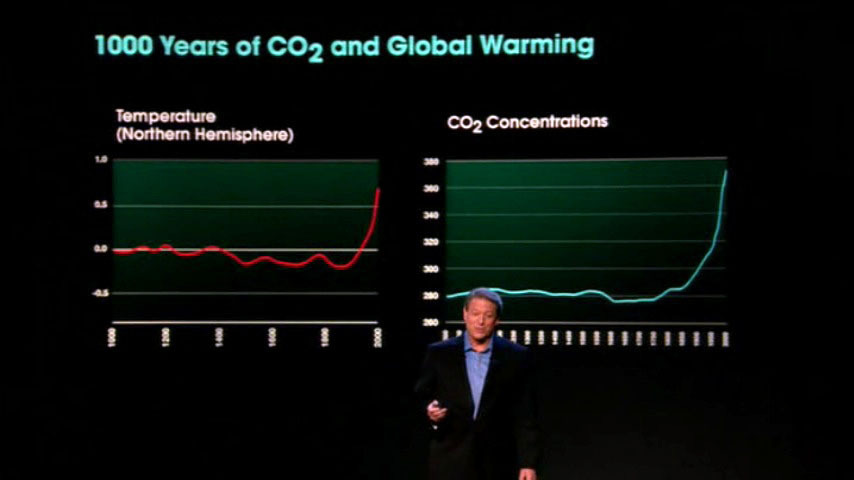
There’s a very powerful through line in the documentary. If you’ve ever seen Al Gore’s “An Inconvenient Truth,” you’ll be familiar with the charts of annual emissions and global temperatures popularized in the film. Global emissions, stable for so long, shoot up around the start of the Industrial Revolution and, following right alongside, temperature shoots up as well. “The White House” effect animates the chart of global emissions to menacing effect. Slowly, steadily, the red trail of emissions ticks higher, pulsing calmly but not stopping its ascent. We know the consequences of that path.
Bush, Pearlman, and their enablers didn’t care about the path of emissions. They ignored it or looked at it and then chose to ignore it. And it returned the favor, not caring what they thought of it and continuing to climb so long as the oil burned. There are trails we should follow and trails we should feel free to ignore. The important bit is knowing which kind of trail is in front of you.
Notes:
Forest Park info from the Parks Department
This is such a great read!!